



Dopamine Receptor
Dopamine Receptors are a class of G protein-coupled receptors that are prominent in the vertebrate central nervous system (CNS). The neurotransmitter dopamine is the primary endogenous ligand for dopamine receptors. Dopamine receptors are implicated in many neurological processes, including motivation, pleasure, cognition, memory, learning, and fine motor control, as well as modulation of neuroendocrine signaling. Abnormal dopamine receptor signaling and dopaminergic nerve function is implicated in several neuropsychiatric disorders. Thus, dopamine receptors are common neurologic drug targets; antipsychotics are often dopamine receptor antagonists while psychostimulants are typically indirect agonists of dopamine receptors. There are at least five subtypes of dopamine receptors, D1, D2, D3, D4, and D5. The D1 and D5 receptors are members of the D1-like family of dopamine receptors, whereas the D2, D3 and D4receptors are members of the D2-like family.
Dopamine Receptor Isoform Specific Products
All Product Categories
-
Dopamine Receptor Inhibitors
(144)
View all products
-
Dopamine Receptor Agonists
(258)
View all products
-
Dopamine Receptor Antagonists
(446)
View all products
-
Dopamine Receptor Activators
(19)
View all products
-
Dopamine Receptor Modulators
(46)
View all products
-
Dopamine Receptor MDM2 Inhibitor
(1)
View all products
-
Dopamine Receptor Controls
(7)
View all products
-
Dopamine Receptor Ligands
(18)
View all products
-
Dopamine Receptor Related Products (1079)
Related Products (1079)

-
Antibodies (7)
-
Related Compound Screening Libraries (1)
-
Dopamine Receptor Isoform Comparison
-
Setoperone
 0 ImagesCat. No.: HY-119800CAS No.: 86487-64-1Setoperone is an orally active and potent 5-HT₂ receptor antagonist and a moderate dopamine D₂ receptor blocker. Setoperone dissociates from the receptors relatively quickly, but it is easily "captured" by serotonin receptors in the body, resulting in persistent receptor inhibition even after elution. Setoperone can be used to study the negative symptoms of type II schizophrenia and associated mood disorders.
-
AB13-08
 0 ImagesCat. No.: HY-184588AB13-08 is a selective dopamine receptor agonist with a Ki value of 53.9 nM for human D3R. AB13-08 is applicable to the research of neurological disorders such as Parkinson's disease and schizophrenia.
-
SKF83822 hydrobromide
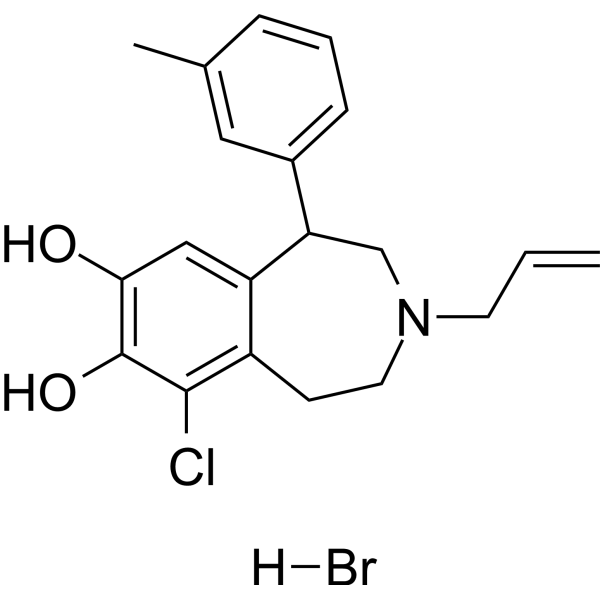 0 ImagesCat. No.: HY-103411CAS No.: 74115-10-9SKF83822 hydrobromide is a potent dopamine D1 receptor agonist. SKF83822 hydrobromide activates Gs/olf/adenylyl cyclase (AC)-coupled D1 receptors, but not phospholipase C (PLC)-coupled D1-like receptors.
-
FGH31
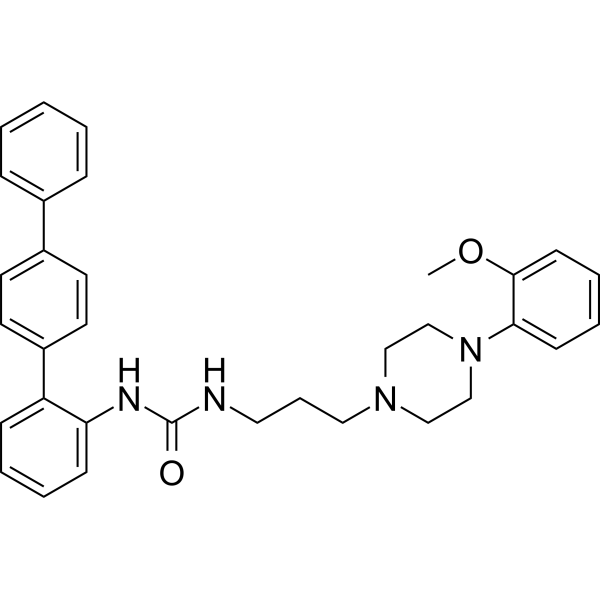 0 ImagesCat. No.: HY-155099CAS No.: 3033813-47-4FGH31 (Compound 24) is a potent, selective, GRK2 dependency dopamine D4 agonist, with the Ki of 1.6 nM. FGH31 partial activates β- arrestin.
-
PF-00217830
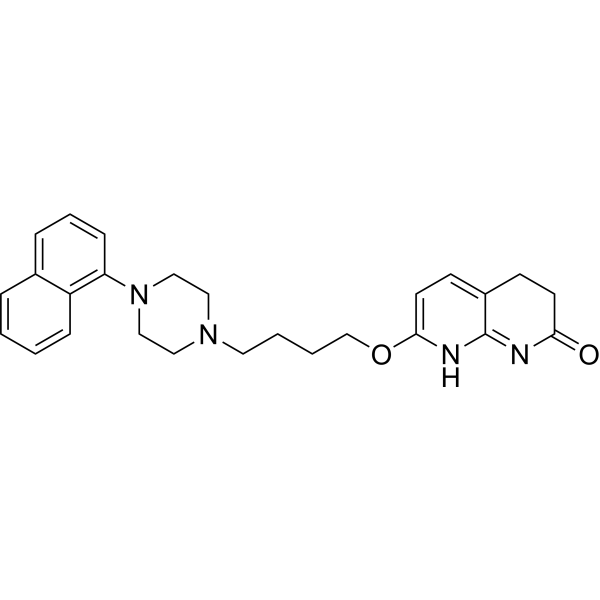 0 ImagesCat. No.: HY-121775CAS No.: 846032-02-8F-00217830 is an agonist ofDopamine D2 receptor. PF-00217830 inhibits of spontaneous locomotor activity and 2,5-dimethoxy-4-iodoamphetamine-induced head twitches in rats.
-
Levosulpiride (Standard)
 0 ImagesSynonyms: RV-12309 (Standard); S-(-)-Sulpiride (Standard)Levosulpiride (Standard) is the analytical standard of Levosulpiride. This product is intended for research and analytical applications. Levosulpiride (RV-12309) is the (S)-enantiomer of sulpiride, which is a D2 receptor a antagonist, an atypical antipsychotic agent of the benzamide class.
-
A 80426
 0 ImagesCat. No.: HY-120037CAS No.: 152148-63-5A 80426 is an orally active serotonin (5-HT uptake) inhibitor (IC50 = 13 nM; Ki = 3.8 nM) and α2-Adrenoceptor receptor antagonist (Ki = 2 nM). A 80426 shows weak antagonistic effect to dopamine D1 receptor (Ki = 744 nM) and D2 receptor (Ki = 52 nM). A 80426 upregulates the expression and activity of TRPV1, activates the NF-κB and PI3K pathways, and reduces the levels of pro-inflammatory cytokines IL-1β, IL-6, and TNF-α. A 80426 can be used in research related to inflammatory pain and depression.
-
Olanzapine-d15
 0 ImagesCat. No.: HY-14541S3CAS No.: 1252611-25-8Synonyms: LY170053-d15Olanzapine-d15 (LY170053-d15) is the deuterium labeled Olanzapine (HY-14541). Olanzapine (LY170053) is a selective, orally active monoaminergic antagonist with high affinity binding to serotonin H1, 5HT2A/2C, 5HT3, 5HT6 (Ki = 7, 4, 11, 57, and 5 nM, respectively), dopamine D1-4 (Ki = 11 to 31 nM), muscarinic M1-5 (Ki = 1.9-25 nM), and adrenergic α1 receptor (Ki = 19 nM). Olanzapine is an atypical antipsychotic.
-
Dopamine D2 receptor antagonist-3
 0 ImagesCat. No.: HY-W648166CAS No.: 1032714-06-9Dopamine D2 receptor antagonist-3 (Example 17) is an orally active and selective dopamine D2 receptor antagonist with a pIC50 of 5.52. Dopamine D2 receptor antagonist-3 exhibits antipsychotic activity in the Apomorphine (HY-12723) induced agitation in rats. Dopamine D2 receptor antagonist-3 can be used for psychiatric and neurological disorders research.
-
L-750667 triHydrochloride
 0 ImagesL-750667 triHydrochloride is a selective antagonist for the D4 dopamine receptor, with a Ki value of 0.51 nM. The radiolabeled form of L-750667, [125I]L-750,667, has a Kd value of 0.16 nM for the D4 receptor. L-750667 triHydrochloride can reverse dopamine-induced inhibition of cAMP accumulation. It can be used to study the distribution and function of D4 dopamine receptors in the central nervous system and has potential applications in the fields of neuroscience and psychiatry.
-
SV 293
 0 ImagesCat. No.: HY-111241CAS No.: 873445-73-9SV 293 is a selective antagonist with neutral antagonist activity. SV 293 binds to human D2 receptors with 100-fold higher affinity and has lower affinity for human D3 and D4 dopamine receptor subtypes. SV 293 was found to block the effects of the full agonist quinpirole in forskolin-dependent adenylate acylase inhibition assays and electrophysiological assays. SV 293 can be used as a useful pharmacological tool to study the role of dopamine D2-like receptor subtypes in dopamine pathways associated with neurological, neuropsychiatric and movement disorders.
-
1192U90
 0 ImagesCat. No.: HY-106943CAS No.: 155289-31-91192U90 is an antipsychotic agent, dopamine D2 receptor antagonist as well as serotonin 5-HT1a receptor agonist. 1192U90 reduces the number of spontaneously firing neurons in the limbic dopamine system.
-
Fluphenazine dimaleate
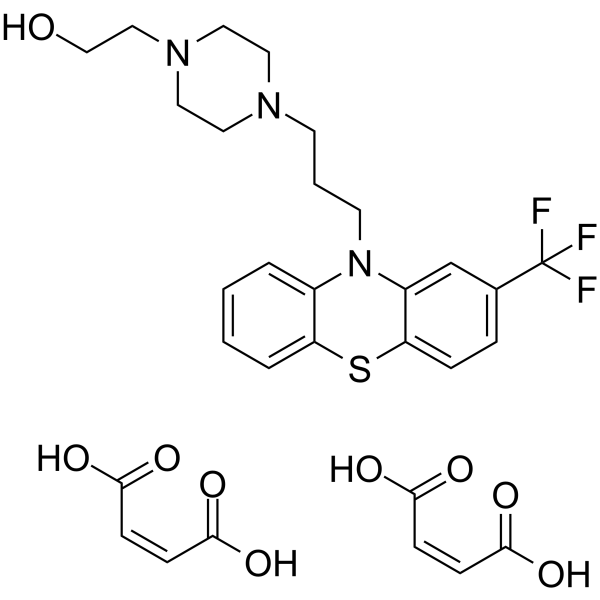 0 ImagesCat. No.: HY-119980ACAS No.: 3093-66-1Fluphenazine dimaleate is a potent, orally active phenothiazine-based dopamine receptor antagonist. Fluphenazine dimaleate blocks neuronal voltage-gated sodium channels. Fluphenazine dimaleate acts primarily through antagonism of postsynaptic dopamine-2 receptors in mesolimbic, nigrostriatal, and tuberoinfundibular neural pathways. Fluphenazine dimaleate can antagonize Methylphenidate-induced stereotyped gnawing and inhibit climbing behaviour in mice. Fluphenazine dimaleate can be used for researching psychosis and painful peripheral neuropathy associated with diabetes and has potential to inhibit SARS-CoV-2.
-
Lurasidone-d8-1 hydrochloride
 0 ImagesCat. No.: HY-W654010Synonyms: SM-13496-d8-1 hydrochlorideLurasidone-d8-1 (hydrochloride) is deuterium labeled Lurasidone (Hydrochloride). Lurasidone (Hydrochloride) (SM-13496 (Hydrochloride)) is an antagonist of both dopamine D2 and 5-HT7 with IC50s of 1.68 and 0.495 nM, respectively. Lurasidone (Hydrochloride) (SM-13496 (Hydrochloride)) is also a partial agonist of 5-HT1A receptor with an IC50 of 6.75 nM.
-
LY 171859
 0 ImagesCat. No.: HY-123189CAS No.: 89139-28-6LY 171859 is a D2 receptor agonist with significant reductase activity. LY 171859 exhibits enzymatic activity in the cytoplasm of liver, lung, and kidney, and also contains significant reductase activity in rat and human blood. LY 171859 has higher hepatic reductase activity in guinea pigs, followed by hamsters, rabbits, rats, and mice. The substrate of LY 171859 shows an apparent Km of 5.6 μM. The reduction reaction of LY 171859 is NADPH-dependent with an apparent Km of 14.8 μM. Only the A-side hydrogen of NADPH is incorporated in the reduction product of LY 171859. The reaction of LY 171859 is inhibited by cyanide and thiol reagents, and phenobarbital does not induce its activity in rats.
-
Mafoprazine methanesulfonate
 0 ImagesCat. No.: HY-126635ACAS No.: 80428-31-5Mafoprazine methanesulfonate is a phenylpiperazine derivative with variable affinities for neuronal receptors. It may exert its antipsychotic effects primarily through D2 receptor blockade and α-adrenergic activity, and may increase the activity of dopamine metabolites.
-
Iloperidone-d3 hydrochloride
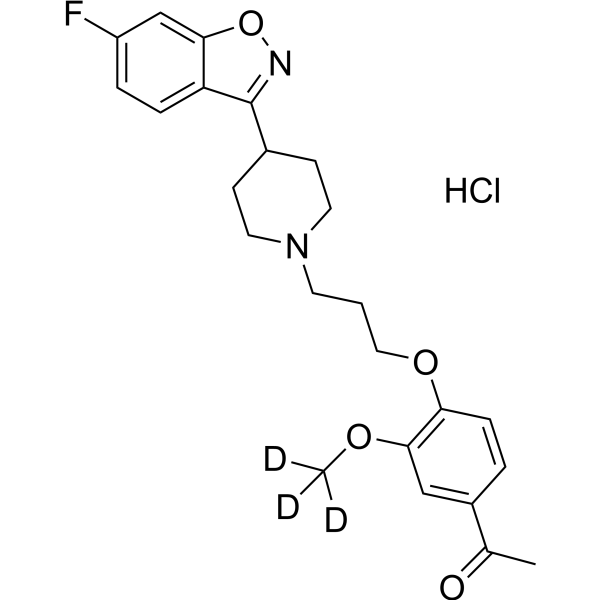 0 ImagesCat. No.: HY-17410S1Iloperidone-d3 hydrochloride is deuterated labeled Iloperidone (HY-17410). Iloperidone (HP 873) is a D2/5-HT2 receptor antagonist. Iloperidone is an atypical antipsychotic for the schizophrenia symptoms.
-
Haloperidol-d4-1
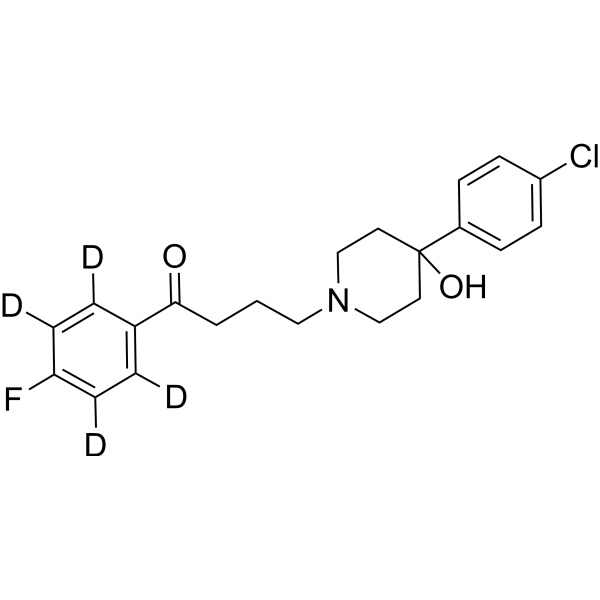 0 ImagesHaloperidol-d4-1 is deuterium labeled haloperidol, and the latter is a potent dopamine D2 receptor antagonist.
-
LR1143
 0 ImagesCat. No.: HY-124186CAS No.: 150151-15-8LR1143 is a dopamine transporter (DAT) and 5-HT uptake inhibitor, with IC50 values of 3.4 nM and 112 nM in rats, respectively. LR1143 binds to DAT labeled with the dopamine reuptake inhibitor GBR 12935 (HY-12242A), with an IC50 of 4.4 nM. LR1143 shows lower selectivity for DAT than for serotonin reuptake sites. LR1143 can be used in studies related to cocaine abuse.
-
MOR agonist-2
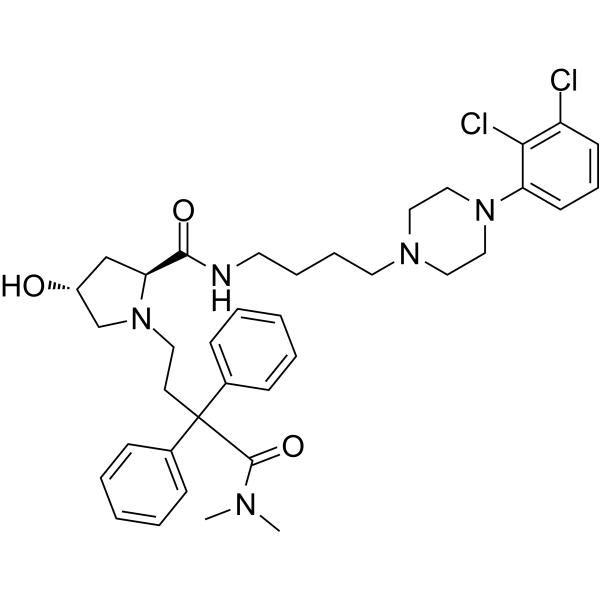 0 ImagesCat. No.: HY-155706CAS No.: 2833692-02-5MOR agonist-2 (compound 46) is a antagonist of D3R and agonist of MOR (Ki: 7.26 nM and 564 nM, respectively). MOR agonist-2 has the potential to produce analgesic effects through MOR partial agonism. MOR agonist-2 reduces opioid-misuse liability via D3R antagonism.




